Sunday, November 8, 2009

Broadcasting on REE


On October 23, I was invited to participate in the current affairs program Otros acentos (Other accents) on Radio Exterior de España, which is broadcast simultaneously here in Spain on Radio 5. Host Mavi Aldana invites a group of foreign-born journalists living in Madrid to get their impressions on world events. This wasn’t the first time I have been on international radio. I was host of Radio Nacional de Venezuela’s English service in Caracas from 1990-1992. When I was living in Puerto Rico, I was the stringer for Voice of America’s now-defunct Report to the Caribbean from 1993-1996.


Mavi Aldana, the host of Otros acentos, with my colleague Ramón Irigoyen, getting ready for the broadcast. We spoke about Cuba, the Prince of Asturias awards, and the proposal for the South American common currency unit proposed by the ALBA-member nations.


The entrance of Radio Nacional de España and old receiver on the display in radio museum located in the lobby. RNE is located in the Madrid suburb of Pozuelo.


The hallway to the studios of Radio Nacional de España / Radio Exterior.

Saturday, October 18, 2008

Among my shortwave souvenirs

Pre-printed reception report forms, calendars and stations magazines were the best gifts a DXer could receive along with a QSL card -- sometimes the printed matter was more attractive than the actual verification card itself. These images explain it all.


1989 program magazine from Radio RSA, the Voice of South Africa (left); a pre-printed aereogramme for RSA monitors' reception reports


Radio Prague sent thousands of these postcard reception report forms, which needed to be filled out and sent back with a stamp on the other side


RAI was so optimistic for the 21st century; they no longer broadcast in English on shortwave


Radio Moscow had some nice pre-printed reception report forms. They came in all different colors, dark blue, light blue, red, pink, green and purple. It was fun filling them out!


Radio Bucaresti, now Radio Romania International, sent really nice calendars and greeting cards during the spring season. This one is entitled "The birth of the Romanian people"


Radio 4VEH was Haiti's popular religious broadcaster

Radio Ulan Bator, now Voice of Mongolia, was difficult to hear in the US and even more difficult to QSL. Here's the station's program guide


And, of course, my dog-eared SWL bible;out of date but still packed with info

Remembering Radio Berlin International


One of the most popular stations transmitting from the Eastern Bloc during the 1970s and 1980s was Radio Berlin International, the Voice of the German Democratic Republic. At the time RBI was the only shortwave station broadcasting from Berlin in English for North America. Most of its programs were centered on glorifying the socialist GDR state and its hard-line dictator Erich Honecker. But RBI knew its audience well. It was successful in attracting SWLs to tune in by offering spectacular QSLs and printed DX bulletins, setting up a monitoring panel, and promoting station fan clubs through the developing world. Following German reunification, RBI transmitted its last broadcast on October 2, 1990. The following is a reprint of a fact sheet I received in 1978 that tells you all about Radio Berlin International:

Radio Berlin International stems from the “Foreign Languages Service” of GD Radio which broadcast its first foreign language programmes – in English and French – in 1955. Transmission in Swedish, Danish, Arabic and German soon followed. However, it wasn’t until May 1959 that the “Foreign Languages Service” became an independent broadcasting station under the auspices of the GDR State Committee for Radio and began its programmes with the station announcement: “You are tune to Radio Berlin International, the Voice of the German Democratic Republic.”

Gradually other programmes were introduced: Italian and Portuguese in 1961; Swahili in 1964; and Hindi in 1967. Spanish came a little later and in 1975 Greek was started. At present there are 50 ½ hours of programmes per day broadcast via directional and omni directional aerials on shortwave and on a further frequency for Europe in the medium waveband. The programmes, which generally last for about 45 minutes, are adapted to suit the interest of listeners in the various countries. They begin with a bulletin of the latest news and are repeated several times a day when conditions are most favourable for reception in the individual parts of the world.


Radio Berlin International aims to provide its listeners all over the world with a picture of life in the socialist German Democratic Republic. We provide information on our peace policy and put forward our point of view on international events. RBI expresses its solidarity over the airwaves with all progressive forces fighting against imperialist exploitation and oppression and plays its part in the struggle for the welfare of mankind, for freedom, peace and friendship between peoples.

In 1967, the RBI Journal was brought out – initially in four languages – to supplement the broadcasts. By 1975 it was appearing in 12 languages.
The Journal publishes a list of the programmes, times and frequencies and provides facts, figures and pictures from all spheres of life to complement the information contained in the programmes themselves. It also acts as a forum for RBI Listeners Clubs and those who aren’t Club members to voice their opinions. A whole page is given over to the subject of DXing. Everybody who sends their address receives a copy of the RBI Journal free of charge. Regular listeners can be put on our mailing list on request. RBI Listeners Clubs are sent as many copies as they require.

These RBI Clubs are for the most part loose associations of friends who listen to us regularly and then write in and tell us of their impression of the programmes. There are well over a thousand such clubs in existence, most of them in Africa, South East Asia and Latin America.

The RBI DX Club was founded in 1967. Werner Neumann, RBI’s deputy editor-in-chief, has been the Club’s president since 1975. The Club has close contacts with many enthusiastic DXers and DX organisations all over the world. Our QSL cards and diplomas for 50 or 1000 correct reception reports are internationally very much in demand. The RBI DX Club meeting goes out over the air every two weeks, the 250th meeting being celebrated on 15 November 1976.”

Wednesday, April 25, 2007

Voice of Russia honors Spanish Civil War exile broadcasters


The Voice of Russia came to Madrid on April 23 to pay recognition to a group of Spanish Civil War (1936-39) exiles who helped put together what would become the Spanish-language service at Radio Moscow. During an emotional ceremony that took place at Hotel Puerta de Toledo next to Madrid’s famous Toledo Gate, Leonard Kosichev, VOR’s deputy director for European programs, handed out medals issued by the Russian government. This was the first time that the Spaniards had been publicly honored for their contributions to Radio Moscow and their role in helping provide information to listeners in Spain during the Francisco Franco dictatorship.

Among those distinguished were Eusebio Cimorra, Pilar Villasante, Vicente Arana, and Agustin Masso, who all began working at Radio Moscow during the 1940s and 1950s. It is estimated that dozens of Spaniards found jobs at the Soviet shortwave radio station after fleeing the Franco regime.

Cimorra, who died in January at the age of 98, was perhaps the most popular Spanish announcer during his more than 30 years at Radio Moscow. Using the on-air pseudonym “Jorge Olivar,” Cimarro began working at the station in 1940. Before the Civil War, he was an influential publisher of the Spanish Communist Party’s newspaper Mundo Obrero. He returned to Spain after the transition to democracy in 1975 and had been recognized as one of the country’s leading "deans" of journalism. “My father always said that Radio Moscow gave him the opportunity to continue to fight against the dictatorship, a fight he began when he was a young journalist in Spain before the Civil War,” recalled Boris Cimorra (left, in photo above) who received the medal on behalf of his father from Kosichev (right, in photo above). “He decided to continue to fight for his ideals and principles because he was true to his faith. In the best of words, he was a communist who was an idealist, romanticist and intellectual,” said the son who also put in five years at Radio Moscow.

Pilar Villasante (left) came to Moscow as a child at the age of six. She was among the hundreds of Spanish children who were sent to the Soviet Union by their parents with the hope they would receive a better life there than in a fascist society. This massive evacuation began taking place toward the end of the Civil War when it became apparent the Republicans would be defeated. Although she was educated and grew up in Moscow, Villasante never forgot her mother language. She served as artistic director for the Spanish service at Radio Moscow, where she worked for 30 years before returning to Madrid in 1989. “I want to thank the Russian people, the Soviet people for taking us in, educating us and giving us the opportunity to work. I was especially lucky because I got to work for Radio Moscow,” she said.

But not all those recognized were broadcasters. Kosichev and Valentina Zlobina, the deputy general director of programs, handed out diplomas to the Voice of Russia’s most dedicated listeners in Spain. Among those honored was Francisco “Paco” Martinez y Martinez (with dark glasses), the founder and current president of the Spanish Radio Listeners’ Association (AER) who said he began tuning in Radio Moscow during the 1950s on his father’s five-tube receiver. “My father made me promise I wouldn’t tell anyone,” he recalled. Listening to Radio Moscow or the clandestine Radio España Independiente could cost you jail time in Franco’s Spain.

A los colegas periodistas y diexistas, !Enhorabuena!

Saturday, February 17, 2007

Former RFI journalist switches to news channel France 24

You may remember her when she hosted Radio France International's English service to Africa. She delivered the news and sometimes anchored the one-hour report about the goings-on in the gigantic, emerging African continent. Now Catherine Galloway is giving a news roundup concerning another part of the world, but doing so as one of the leading personalities on France 24 – the new French radio and cable/satellite television outlet that hopes to nudge in on the international market already dominated by CNN and BBC World. France 24 went on the air on December 6, 2006 and broadcasts 24 hours in French, English and Arabic. Galloway, 32, hosts This Week in the Americas, which is broadcast on Thursday and repeated Friday and Saturday. If you can’t get France 24 in your area, check out their Web site.

Friday, January 26, 2007

Improving sound on shortwave

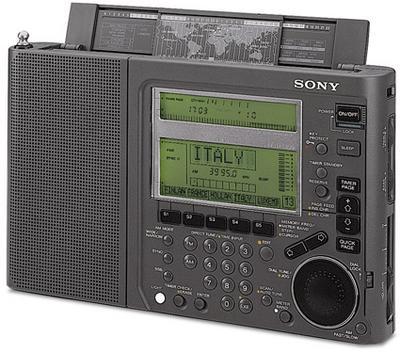
With the abundance of cheaper shortwave receivers on the market, audio has been compromised in favor of price. There are, by far, some receivers that sound better than others and, of course, high price doesn’t necessarily mean better audio quality. Take for instance the DX-440 and the Sony ICF-77. Both are great portables with bass and treble controls. However, the top-notch Sony, which perhaps performs just as good as any table top, cannot reproduce the rich low frequency audio than what the less expensive DX-440 is capable producing. And looking back even further when multi-band analog radios were popular in their heyday in the 1970s, their sound performance was exceptional but they were dreadful DX machines. In any case, here are a few tips that I think can help any listener who wants to improve the sound coming from abroad on any radio.

Put out the outboards

The speakers don’t have to be, and really shouldn’t be, expensive CD outboards such as Sony or Panasonic. These electrical speakers are geared for quality stereo sound and not for AM broadcasts. Here in Europe, I found an off-brand, not exactly known for its fine quality stereo products, at a local retail outlet, which set me back 20 euros or about US$24. But in places like Walgreens or Duane Reade drugstores, you’ll no doubt find a good pair that will do the trick. When I connect my mini Sangean 606 to the outboards, oh, what a difference a day makes. Don’t forget to adjust the volume level on your receiver to no more than medium notch and turn up instead the sound level on your speakers. Otherwise, your audio will turn to QRM.

Watch those ears!

Earphones or plugs are great but let's face it – they are unbearable. The older you get the less likely you will want anything that’s not flesh hugging your head. I remember using those massive head huggers listening to Grand Funk Railroad and Three Dog Night in the 1970s. Still, headphones and plugs offer incredible privacy and they are excellent for honing in on the DX. But they are impossible to use when you are sleeping or cumbersome when trying to listen to magnificant classical music from Moscow or fabulous folk tunes from Belarus, Greece or Indonesia. You do need them, though, because they come in handy. Remember that most that are sold nowadays are stereo headphones, which amplify all the squeals, cracks and pops on shortwave. So try to look for phones or plugs that reproduce “mono” sound. They are of course poor performers on the FM band, but remarkable for shortwave and AM transmissions.

Come inside

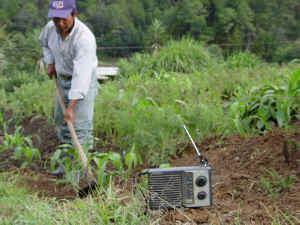
No doubt, unless you have a great shortwave boom box, known better before the politically correct days of the 1980s as “a ghetto blaster,” your shortwave radio is no good outdoors. Some brands and models are better than others, but remember, you will always have fading and competing noises from the outdoors.

Monday, January 22, 2007

Rebel radio: Pridnestrovie's English transmission

Many of my DXer friends across the pond frequently ask me about Radio Pridnestrovie (PMR) broadcasts in English. It is almost impossible to hear their 20 minute transmission at 1700 UTC on 6,235 kHz in North America at this time. But they do put in a good signal here in Spain at this hour because it is early evening.

Pridnestrovie or Transnistria is the pro-Russian sector of Moldova which is trying to break away and lies just east of the Dniestr River. Although it isn’t recognized internationally as an independent country, it is a mysterious land where foreigners’ visits are infrequent.

I uploaded a video on You Tube of my Sony ICF-77 tuning into Radio PMR. The broadcast opens about an incident in which authorities captured and later released two Moldovan police officers last week. It may take time to load. So be patient. It is worth it.

Shortwave radio far from dead in South America

Editor's note: This first appeared in my madrid kid blog on January 14, 2006.

Everywhere you turn, you hear gripes from shortwave listeners that the international bands are dying as broadcasters undergo cutbacks and look at innovative technology -- digital and satellite radio and the Internet -- to get their programs to listeners. A few weeks back, I found an interesting survey posted on a DX page hosted by Brett Sayler of Pennsylvania that counters those arguments.

This veteran DXer compared the number of stations in South America that were broadcasting 48 years ago and those on the air today. In an informal survey, Brett took a random sampling of the stations by referring to World Radio Television Handbooks for the years 1957, 1971, 1977, 1992, 1999, 2003 and 2005. He found that in 1957 there were 394 stations broadcasting from the 14 countries that make up South America, including the Falkland Islands. In 2005, Brett reports that there with 376 stations listed. Brazil, which has kept the lead over the years, had 109 stations on the air on shortwave in 1957. In 2005, there were 151 stations broadcasting from the Portuguese-speaking nation. The peak year for shortwave from South America was 1977 when 592 stations were on the international bands. Oh, by the way, Brett didn´t count HCJB in Ecuador and Radio France Internationale´s transmitters in French Guiana.

"In conclusion, to those who are ready to pronounce shortwave radio dead, there are still many good opportunities to hear exotic stations in far-off locations. But, you should get them now while you can. Who knows what the next 50 years will bring?" he says.

I firmly believe, as I posted previously, that those who complain about the so-called demise of the shortwave bands are listeners who only tune to English-language programming. You cannot measure the universe by only looking through a telescope!

Check out Brett´s page for some more interesting stuff, including some rare photos of a 1970s all night DX session organized to search for the elusive Falkland Islands Broadcasting Service with now-veteran DXers Don Moore and Dave Valko.

When the US Embassy predicted the failure of Pinochet's ambitious Voice of Chile project

Editor's note: This first appeared in my madrid kid blog on June 14, 2006.

Just days after dictator Augusto Pinochet inaugurated the powerful Voice of Chile on January 15, 1974, a U.S. diplomat told his superiors in Washington that he had reservations about the effectiveness of the shortwave radio station and predicted that it would fail because it wouldn’t be able to attract enough listeners.

This revealing appraisal is contained in a recently declassified cable sent by an American Embassy official in Santiago and obtained by George Washington University’s National Security Archive. The diplomat, who signed the missive using only his last name Villarreal, described Pinochet’s plans for his station as “grandiose.” Just four months earlier, Pinochet, with the U.S. government’s backing, led a bloody coup that toppled Marxist President Salvador Allende.
“This is a major propaganda effort by the government of Chile,” Villarreal wrote Washington on January 17, 1974. “Junta seems determined, however, to fight critics abroad and attempt to correct what they see as a distorted image of Chile peddled by former Allende supporters and fellow-travelers.”

On the morning of September 11, 1973, Allende was cornered inside La Moneda Presidential Palace in downtown Santiago just less than two hours after broadcasting an emotional last-stand speech on Radio Magallanes. In another part of the city, a faction of the Chilean army was confiscating new Soviet-made transmitters that had been supplied to the Communist-backed Radio Recabarren and Radio Magallanes, Villarreal’s cable explained. The powerful 70 kilowatt transmitters were then set up across the street from the Defense Ministry and put to the Junta’s use at Radio Nacional de Chile. During the inauguration ceremony, Pinochet said the station’s purpose was “to let world know of heroic Chilean struggle to save the country from the totalitarian claws of Soviet imperialists,” the diplomat summarized.

With domestic transmissions on 1140 kHz, Radio Nacional would begin broadcasting as the Voice of Chile in several languages including English on shortwave throughout the 1970s from Radio Cooperativa’s studios. Villarreal identified Col. Eduardo Sepulveda, “the Junta’s prime communications man” who would later become the Chilean consul in Miami, as head of the station’s board of directors. Station manager Gabor Torey and press officer Francisco Barahona were both hired from Radio Mineria by the Junta’s secretary general. “Although plans for Radio Nacional are grandiose, knowledgeable radio contacts doubt efficacy of international broadcasting effort pointing to high costs, limited listening audience and past failures to mount shortwave efforts from Chile,” Villarreal reported.

Villarreal’s observation was correct. By the mid 1980s, the Voice of Chile suspended its international broadcasts and in 1988 Pinochet was voted out of office in a referendum. The eight 100 kilowatt Harris shortwave transmitters that once belonged to the Voice of Chile were purchased in 1998 by Christian Vision, a religious broadcaster, for its Radio Voz Cristiana and are in use today.

Shortwave and Hollywood don't mix

Editor's note: This first appeared in my madrid kid blog on May 17, 2006.


Except for a brief mention here and there, shortwave themes seldom pop up on the silver screen. Last year’s acclaimed “Good Night, Good Luck” –- about an episode in the glorious life of journalist Edward R. Murrow, the CBS newsman who later became VOA director –- failed to mention his career as an international shortwave pioneer. “Pump Up the Volume” did have Christian Slater in 1990 as a teenage pirate broadcaster giving his schoolmates some sobering thoughts on life. But still, films about shortwave are rare if non-existent. So with a little help from IMDB, here is my list of movies I have compiled throughout the years in which shortwave –- or something alluding to it –- shows up on screen.

The Diary of Anne Frank (1959) – How can we forget the poignant scene of the Franks and the Van Dammes huddled around a shortwave receiver in their hiding place listening to the BBC announce the landing at Normandy? Or their faces of despair when they tune to Berlin radio and hear Hitler’s ranting and raging. But my favorite scene is when the viewer is treated to hearing the carillon in the nearby Westerkerk tower playing Merck toch hoe sterck, the same tune used today by Radio Netherlands. If you visit Amsterdam, you can still hear the 47 bells of the carillon, which was restored in 1959, playing Merck toch hoe sterck.

Johnny Shortwave (1996) -- Pirate broadcaster Johnny Shortwave (Emmanuel Mark) transmits his ideals for freedom and offers encouragement in a totalitarian fascist state depicted in this low budget sci-fi movie from Canada, which was sporadically shown in some US cities.

Overboard (1978) – This made for television movie starring Angie Dickinson (in her post-“Pepper” days) has an interesting opening scene. Most of the film takes place in the south Pacific on board a yacht where Dickinson and Cliff Robertson air out issues concerning their treacherous marriage. The first spoken words in this film come from a radio receiver on deck with an announcer in English identifying the station as Radio Tahiti!

Munich (2005) – Daniel Craig disagrees with a Palestinian terrorist staying inside a safe house in Cyprus over which station on a large multi-band portable they should tune. The terrorist wants to hear Arabic music from a distant station in his land while Craig wants more contemporary Israeli music. Although they cannot communicate in their respective languages, they settle on a rock and roll station.

The Roman Spring of Mrs. Stone (1961) – Although no reference to shortwave is mentioned here, there is an interesting shot of a contemporary Grundig receiver sitting on a mantelpiece during a torrid scene between Warren Beatty and Vivian Leigh.

Intervista (1987) – Federico Fellini’s autobiographical movie has Marcello Mastroianni walking into the film studios of Cine Citta in Rome. For a brief moment, as if it were meant to be a subliminal message, you can hear RAI’s chirping bird interval signal played as he enters the gates.

Thirteen Days (2000) -- Kevin Costner wakes up to hear Radio Moscow's historic broadcast announcing that Soviets are pulling out all missiles from Cuba.